
Why more ultra-wealthy families are designing education around their child instead of around a school.
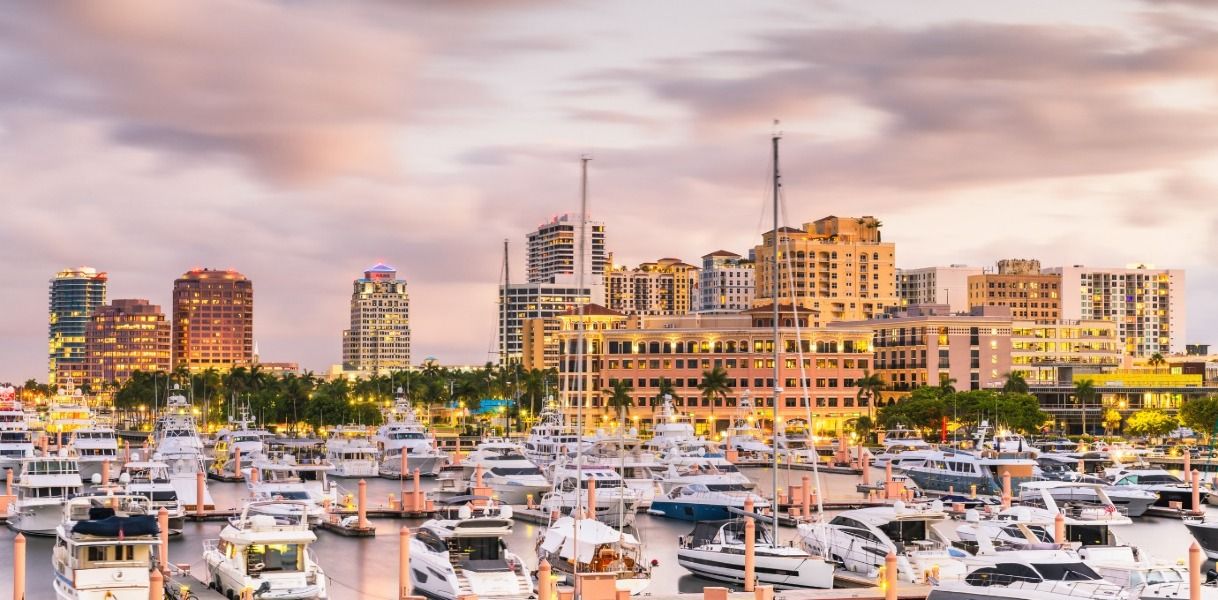
A recent Wall Street Journal article examined the rise of billionaire-backed private schools in West Palm Beach, Florida, developed in response to growing demand from internationally mobile finance and technology families relocating to the state.
They may have emerged partly out of frustration with shortages of school places and the pressures created by rapid relocation into Florida, but the schools themselves are impressive by any standard. Small classes, engineering labs, entrepreneurship programmes, sailing, aviation, interdisciplinary learning, and highly personalised educational environments all feature prominently. They reflect the kind of broad, engaging education parents would love to give their children if resources, time, and logistics were no obstacle.
These schools are a response to real pressures UHNW families are facing.
Some parents interviewed for the article reportedly put relocation plans on hold because they struggled to find suitable school places for their children, while others ran into waiting lists stretching on for years at well-known schools. For internationally mobile families, it’s a challenge we’re seeing more often, and one that highlights a growing pressure on education systems more broadly.
Most schools, including many excellent ones, are built around stability and routine. The school year follows a calendar, attendance depends on being in the right place at the right time, and students usually move through lessons together as a group. For lots of children and families, that works well. But for families whose lives involve international moves, frequent travel, or sport or performance commitments, school structures can sometimes be tricky to fit around everyday life.
So, affluent families are looking for education that combines academic excellence with the flexibility they need.
Interestingly, many of the features celebrated in these new Florida schools reflect educational principles long supported by research. Studies into small-group and one-to-one instruction consistently demonstrate the benefits of highly personalised teaching, close mentorship, rapid feedback, and flexible pacing. Benjamin Bloom’s well-known “2 Sigma Problem” found that students receiving one-to-one tutoring significantly outperformed peers taught through conventional classroom instruction. More recent work around motivation and self-determination theory has also highlighted the importance of autonomy, individual engagement, and responsive teaching environments.
What these Florida schools appear to recognise is that many children flourish when education becomes more personal, more flexible, and more connected to the real world.
Adam Caller, founder of Tutors International, believes this reflects a change in parental expectations.
“Parents are increasingly looking for an education that can adapt around their child, rather than requiring their child to adapt constantly around the system,” he says. “The appeal of these schools is understandable. They are trying to create environments that feel intellectually ambitious, highly individual, and genuinely engaging.”
But for many affluent families, it’s not just about academics or impressive facilities anymore.
Many UHNW parents are not simply looking for stronger academics or more impressive facilities. They are thinking carefully about the type of person their child becomes within these environments. We’ve explored this previously in relation to children growing up around significant wealth, visibility, and pressure, where questions of identity, resilience, and belonging often become central to education.
“Parents want continuity, stability, mentorship, intellectual curiosity, and emotional wellbeing alongside strong academics.”
For children growing up in very wealthy or high-profile environments, questions of identity, independence, belonging, and emotional grounding can become unusually complex. Parents often worry about pressure, isolation, entitlement, or children being surrounded by people managing their lives rather than genuinely guiding them.
That is one reason many affluent families are looking for educational environments that feel more personal, grounded, and connected to real life. Smaller schools can offer closer mentorship, stronger personal development, and more space for children to build an identity beyond family wealth or public attention.
Adam Caller believes this side of education is becoming increasingly important.
“Parents are asking deeper questions,” he says. “They’re thinking about character, independence, emotional maturity, and how to raise grounded young people within circumstances that are, by definition, unusual.”
The Florida schools described in the WSJ article seem to reflect a new focus among many affluent families: that education should not simply prepare children to succeed within the world they inherit, but help them develop the confidence, judgement, resilience, and sense of self to navigate it well.
