
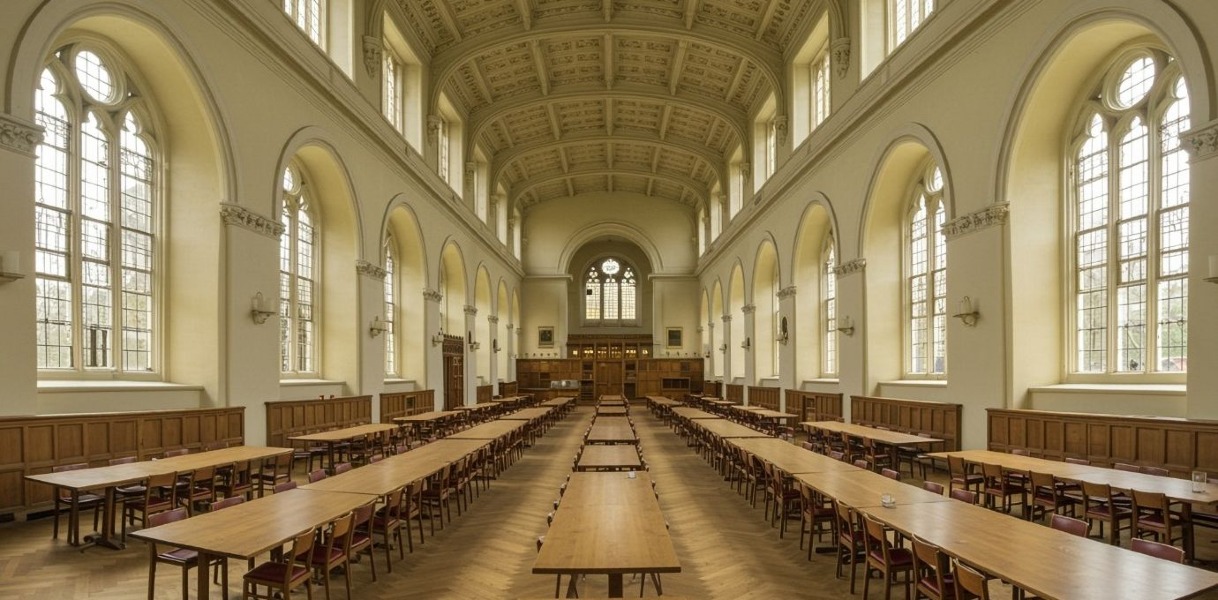
International families still value British education deeply, but increasingly want it delivered in more personalised and culturally adaptable ways.
The recent closure of Wycombe Abbey School Nanjing attracted considerable international attention. Opened only a few years ago, the campus was the epitome of prestigious British schools expanding overseas to meet growing global demand for a British-style education.
But the story behind the closure is more complicated than a single school struggling in one market.
According to reporting in the Financial Times, the campus faced a combination of tighter educational regulation, shifting parental priorities, demographic decline, and growing uncertainty around international schooling models. Local authorities increasingly pushed schools towards Chinese national curricula and examination systems, while the school itself acknowledged a mismatch between its “holistic” educational philosophy and local demand for more exam-focused outcomes.
None of this suggests that interest in British education itself is disappearing. Far from it. If anything, families across the world continue to place enormous value on what British education represents: intellectual breadth, articulate communication, confidence, curiosity, strong academic preparation, and a certain ease in different social and cultural environments.
What may be changing is how families want to access those qualities.
For many years, the international expansion of British boarding schools seemed straightforward. A respected school name, transplanted overseas, carried instant prestige. Parents often saw British schools and universities almost as guaranteed pathways to not just academic success, but to greater opportunity and social confidence.
And many of those schools continue to thrive internationally. But education is deeply cultural. What works beautifully in rural England does not always translate seamlessly into every international context. Expectations differ. Regulations shift. Family lifestyles evolve. Increasingly, globally mobile families want educational arrangements that adapt around the child, rather than requiring the child to adapt entirely around an institution.
As British schools continue expanding internationally, some educational researchers have also questioned how easily a school’s ethos, culture and educational philosophy can truly be replicated across very different political and cultural environments. A famous school name may travel quickly, but the subtler qualities underneath it can be more tricky to reproduce at scale.
That is one reason private tutors remain in such high demand internationally.
“Schools inevitably standardise. A tutor can personalise almost everything: curriculum, teaching style, routine, travel, pastoral support, even the rhythm of the day.” - Adam Caller, Founder, Tutors International
A tutor can carry the ethos of a British education into vastly different environments while remaining flexible enough to respond to local realities, family priorities, and the individual child in front of them. They are not constrained by a fixed campus, a single curriculum, or the operational complexity of running a large institution across borders.
For some families, a British boarding school remains exactly the right fit for their child. For others, especially those living internationally or moving frequently between countries, a more personalised model offers something increasingly valuable: continuity.
We see this often at Tutors International. Families may divide their time between several homes, relocate unexpectedly for business or political reasons, or want to keep multiple university pathways open across different countries. In those situations, flexibility matters enormously. So does emotional stability for the child.
A carefully chosen tutor can provide both.
This does not mean replacing academic rigour with something softer or less ambitious. In fact, many families want the opposite: exceptional academic standards combined with wider intellectual and personal development. Strong exam results alongside confidence, good judgement, curiosity, and cultural fluency.
Large educational institutions can sometimes struggle to balance all of those expectations internationally because they must operate at scale. Bespoke tutoring works differently. It starts with the child, the family, and the life they actually live.
“Schools are built around cohorts. Tutors are built around individuals.”
The closure of one overseas campus does not signal the decline of British education abroad. In fact, the appetite for British educational values remains remarkably strong, as we’re seeing through greater numbers of enquiries for British private tutors overseas.
It may, however, point towards a change that’s already happening. That families are separating the idea of a British education from the idea of a British school building.
Could it be that what parents ultimately want now is not simply a famous crest overseas, but the qualities they associate with British education itself: thoughtful teaching, intellectual seriousness, kindness, confidence, good manners, adaptability, and breadth of mind.
Those qualities travel extraordinarily well. Often best through exceptional people.
