
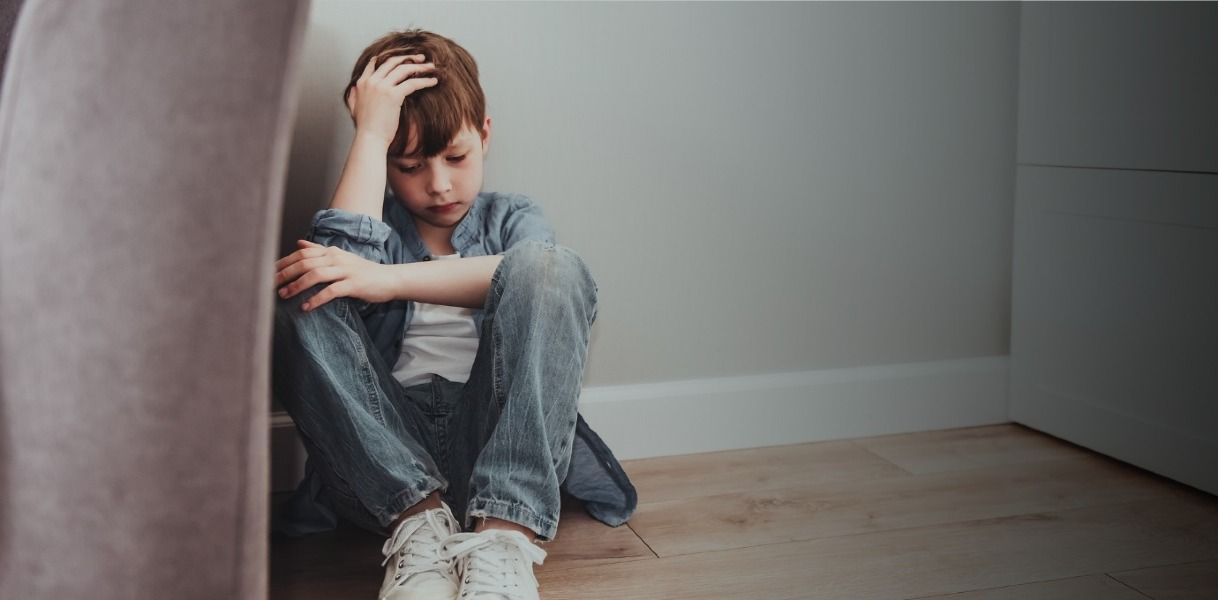
Pathological Demand Avoidance (PDA) is often misunderstood, particularly in high-achieving children. We explore what it looks like, why school can become overwhelming, and how families can support a child’s recovery and re-engagement with learning.
Many parents first begin to understand Pathological Demand Avoidance (PDA) when the picture they receive from school no longer matches the child they are living with at home.
Teachers may describe a bright, capable pupil who joins in lessons, maintains friendships, and appears to be managing well. At home, the same child may be overwhelmed by ordinary expectations: getting dressed, eating breakfast, leaving the house, completing homework, or simply being told what comes next. What begins as anxiety or reluctance can gradually become prolonged negotiation, emotional exhaustion, violent outbursts, school refusal, and a level of distress that seems entirely out of proportion to the request being made.
We spoke to Erin, whose son George left his private school in November 2024 after a long period of difficulty that was later understood through a PDA profile.
“I was desperate to find out why George was suddenly crying in the car, unable to go into school. He wasn’t being bullied. His teachers loved him. He had some close friends. He had been enjoying school and playing sports. And suddenly, over the course of a few months, he went downhill and was refusing to get out of the car at the school gates. I knew something wasn’t right, but I had no idea what I was looking for. That led me to start looking at ADHD, and then to autism. It was in teaching myself all about autism that I came across PDA.”
For families in this position, the confusion is often compounded by the child’s strengths. Many children with PDA are academically able and socially engaged, often with strong verbal skills, and highly skilled at concealing their distress during the school day. It can take months, sometimes years, for parents and professionals to recognise that the issue is not willingness, intelligence, or parenting, but the child’s escalating response to demands.
Understanding PDA
PDA remains an area of ongoing discussion among clinicians, researchers, and neurodivergent communities. It is generally understood as a profile associated with autism, although there is no universally agreed diagnostic pathway and professional opinions differ regarding how it should be classified and assessed.
The terminology itself reflects some of this debate. While PDA traditionally stands for Pathological Demand Avoidance, many families and professionals now prefer Pervasive Drive for Autonomy. The latter reflects a view that these children are not simply avoiding demands, but are experiencing a profound need to maintain a sense of control and agency over their lives.
Erin strongly preferred this interpretation.
"I've always preferred 'Pervasive Drive for Autonomy' to 'Pathological Demand Avoidance'. The second sounds as though children are deliberately refusing things. That wasn't what I was seeing at all."
Whatever terminology is used, most descriptions of PDA share a common characteristic: everyday demands can trigger an unusually strong anxiety response. Some professionals believe that PDA is a nervous system disability, triggering a child’s fight/flight/fawn/freeze reaction.
Importantly, these demands are not limited to schoolwork. Parents often describe difficulties around getting dressed, leaving the house, eating meals, transitioning between activities, answering questions, joining social situations, accepting praise, or preparing for bed. Activities a child genuinely enjoys can become difficult once they are perceived as expectations.
As Erin explained:
"George wasn't consciously avoiding things. The best way I can describe it is that even the expectation of doing something could trigger a fight-or-flight response."
This is one reason PDA can be so difficult for families, schools, and even professionals to recognise. The behaviour may appear irrational because the child is often capable of doing the task. The child’s anxiety lies in the emotional and physiological response that the demand itself provokes.
Why PDA often goes unrecognised
One of the reasons PDA can remain hidden for years is that many affected children possess considerable strengths.
Like George, they may be highly intelligent, articulate, socially perceptive, creative, humorous, and academically successful. Many develop sophisticated coping strategies and become exceptionally skilled at masking their difficulties in order to fit in. Some learn very quickly what is expected of them and work extraordinarily hard to meet those expectations, at least for a period of time.
Within high-performing educational environments, these strengths can obscure the extent of the underlying struggle.
A child who is achieving well academically, participating in lessons, and maintaining friendships is unlikely to be viewed as a pupil in crisis. Yet the effort required to sustain that presentation can be enormous.
This difference between what happens at school and what happens at home is a recurring theme in conversations with families. Teachers may see a bright, engaged child who appears to be managing well. Parents may see anxiety, emotional exhaustion, school refusal, withdrawal from previously enjoyed activities, or a level of distress that seems disproportionate to everyday events.
Neither perspective is necessarily wrong. Teachers and parents are often seeing different aspects of the same child.
This can be enormously frustrating. Parents start to question their instincts, while professionals may reach different conclusions depending on where and when they assess the child.
For families who have already invested significant money and effort into finding the right support, it can be a very confusing time. Many begin wondering whether they are missing something obvious or somehow contributing to the problem themselves.
One of the defining features of PDA is this mismatch between outward capability and underlying capacity. The child may appear to be coping long after the effort required to do so has become unsustainable.
Why good schools can still become too much
Discussions about PDA sometimes create the impression that schools are failing children. But many schools work extremely hard to support neurodivergent pupils, and many children with PDA remain successfully within mainstream or independent education.
The challenge is that schools are structured environments. Timetables, transitions, deadlines, classroom expectations, social interactions, and adult authority are necessary features of educating groups of children. For some children with PDA, however, the cumulative weight of these demands becomes increasingly difficult to tolerate.
Erin is careful not to criticise George's school.
"I don't blame the school. Looking back, I think this would probably have happened wherever he was."
Nevertheless, her experience highlights a challenge that many families do not realise exists within independent education. Unlike maintained schools in England, independent schools are not required to appoint a Special Educational Needs Coordinator (SENCO). Many independent schools invest heavily in learning support departments and some provide outstanding provision for neurodivergent pupils. However, the level of expertise varies considerably between schools and often depends on the experience and interests of individual members of staff.
This can come as a surprise to families who assume that higher fees automatically equate to stronger support for additional needs. In practice, a school may offer exceptional academic teaching, facilities, pastoral care, sport, and enrichment opportunities while still having limited experience of profiles such as PDA, autistic burnout, or high-masking presentations of neurodivergence.
Erin encountered this herself. While some teachers at George's school worked hard to support him, she found that understanding of PDA was limited and that progress often depended on particular staff members taking a personal interest in learning more.
She believes this is an area where many independent schools will need to continue developing their expertise.
"Independent schools are going to have to catch up."
She observed that moving from a small village primary school into a more demanding private school environment introduced lots more pressures simultaneously. There were more teachers, moving between classrooms, after-school clubs, and more opportunities for comparison with peers' achievements.
When school refusal is hiding burnout
By the time many families seek specialist advice, the problem is often described as school refusal or Emotional Based School Avoidance (EBSA). It is important to recognise that not all school refusal is PDA. Children may struggle to attend school for many reasons, including anxiety, bullying, unmet learning needs, mental health difficulties, trauma, or challenges within the school environment itself. We explored these wider issues in our article on rethinking school refusal.
For some children with PDA, however, attendance is only the most visible symptom of a much broader decline in their ability to cope.
Parents frequently describe a child who initially struggles with school attendance but gradually begins struggling with other aspects of daily life as well. Eating becomes difficult. Sleep becomes difficult. Personal care becomes difficult. Leaving the house becomes difficult. Activities that were once enjoyable may be abandoned altogether. For some children, even basic bodily needs can begin to feel like demands. Erin recalls that George would refuse to eat or sleep, even though he understood intellectually that he was hungry or tired. His body simply seemed unable to respond. What started as a problem with school begins affecting every area of family life.
This is why many parents and clinicians increasingly talk about burnout.
Within autism research, burnout is generally understood as a state of profound physical, emotional, and cognitive exhaustion resulting from prolonged stress and the sustained effort of adapting to environments that exceed an individual's capacity to cope. While every child is different, families often describe a similar pattern: years of masking, years of managing expectations, years of pushing through discomfort, followed by a gradual loss of capacity.
Looking back, Erin believes this was what happened to George.
"I genuinely believe George was exhausted from masking all day at school. Eventually there was nothing left in the tank."
As burnout deepens, the conversation often shifts. Parents are no longer asking how to improve attendance, boost academic performance, or support revision. They are asking more fundamental questions about their child's wellbeing.
"At some point we had to stop asking whether he could keep going and start asking whether he should. He was struggling, he was suffering, and we had to make that decision for him."
For many families, this is the point at which educational concerns become secondary to recovery.
Deschooling is a necessary part of recovery
For parents who value education deeply, many of whom are high achievers themselves, deschooling can feel deeply uncomfortable.
Most families spend years encouraging good habits, building routines, supporting learning, and emphasising the importance of education. When a child leaves school, the instinct is often to replace it immediately with another form of provision. Lost learning feels urgent. Academic gaps feel threatening. Parents worry that valuable time is slipping away.
Families who have lived through significant burnout often describe a different priority.
Before learning can be rebuilt, capacity may need to be rebuilt.
Following George's withdrawal from school, Erin and her family made a conscious decision to reduce demands rather than introduce new ones.
"When we took him out of school, we stripped away as many demands as we possibly could. For a long time, we weren't trying to make him learn anything. We were trying to help him recover. He's now been out of school for eighteen months, and we're only now beginning to see signs of emerging from that burnout."
For many high-achieving families, this approach can feel counterintuitive. Recovery rarely produces the kinds of milestones parents are used to measuring. Progress may first appear in small but significant ways: a child sleeping better, able to leave the house for appointments, reconnecting with interests, becoming more sociable, or perhaps just seeming more comfortable in their own skin.
Deschooling creates the conditions in which a child can eventually re-engage with learning without immediately triggering the same cycle of overwhelm.
Accepting that PDA follows unconventional timelines
Not every child will need eighteen months. Some may need less time; others may need more. What Erin's experience illustrates is that recovery from burnout rarely follows an academic timetable. Recovery is usually gradual and often takes longer than families expect.
Erin reflected:
"We've created all these arbitrary timelines for children and then panic when they don't follow them."
Accepting that a child's educational path may no longer follow a conventional one can be one of the hardest moments.
Most education systems assume a relatively standard progression through year groups, examinations, and milestones. Children recovering from burnout do not always fit comfortably within that framework.
That does not mean qualifications cease to matter. It means that success may need to be measured more broadly than simply keeping pace with peers.
"If George doesn't do GCSEs until he's twenty-one, that's fine. I'd much rather have a child who is safe, happy and fulfilled than one who hits every milestone on time."
For many families, reaching that perspective becomes a turning point. Once the focus shifts from maintaining a timetable to rebuilding capacity, new possibilities begin to emerge.
For children with PDA, recovery is not a pause in education. It is often the foundation upon which future learning depends.
Rebuilding their relationship with learning
One of the most reassuring discoveries for many families is that learning rarely stops simply because formal education pauses.
Children remain curious, they continue developing interests, acquiring knowledge, solving problems, and building skills. For many children recovering from burnout, learning is something they still gravitate to, albeit in a non-structured way. They choose to learn, and it’s on their terms, rather than something they are required to do.
Erin described this period as "learning by stealth".
"A day in London. A museum. A conversation. Anything that didn't feel like formal education."
In George's case, technology became one route back towards confidence and engagement. His interest in building computers and modifying software allowed him to develop expertise, gain confidence, and engage with others in an environment that felt driven by his curiosity rather than anyone’s expectation.
For children recovering from burnout, interests are often more than hobbies. They can provide a way back into learning itself. Through an area of genuine curiosity, a child can rediscover competence, confidence, persistence, and the satisfaction of mastering something difficult.
Reintroducing learning carefully and thoughtfully
One of the most difficult questions for parents is knowing what should happen next.
Once a child has left school, there is often a strong temptation to replace it immediately with another form of educational provision. Parents worry about academic gaps, future qualifications, social development, and the possibility that valuable time is being lost.
Yet children emerging from significant burnout are not always ready for formal learning. Reflecting on the early stages of George's recovery, Erin felt that professional support was often more valuable for the adults than for George himself.
"He wasn't ready for educational interventions, therapy, or formal learning. At that stage, the educational psychologist was helping us understand him."
Families often assume that an educational problem requires an educational solution. In practice, many children first need adults around them who understand PDA, burnout, masking, and neurodivergence well enough to support recovery and help parents make informed decisions about what comes next.
Only then can learning begin to re-enter the picture. When it does, it’s not going to restart with a timetable, curriculum, or assessment framework, but with a safe and predictable relationship.
"Before any learning can happen, there has to be trust. For George, building a relationship with one safe adult was far more important than any curriculum."
Building that relationship often requires adults to rethink how they communicate with the child.
Many of the approaches parents instinctively use, direct instructions, repeated reminders, rewards, praise, or encouragement, can have unintended effects when a child experiences expectations as pressure.
Erin describes learning an entirely different style of communication. Rather than saying:
"Put your shoes on," she learned to use more declarative language: "I'm going to put my shoes on. Yours are by the door."
The difference may appear small, but for some children it reduces the feeling of being directed or controlled and allows them greater autonomy over their response.
She also discovered that interactions most adults would regard as positive could sometimes create additional pressure. On one occasion, George was happily practising bowling techniques against a wall. His father commented on how well he was doing. George stopped immediately, because the praise itself had become an expectation. The moment his efforts were noticed, there was a perceived pressure to continue, improve, or repeat the performance in future.
Many families benefit from working with professionals who understand PDA. Their role is often as much about helping parents understand how their child experiences the world as it is about supporting the child directly.
For some children, that trusted adult may be an educational psychologist with experience of PDA. For others, it may be a mentor, neurodiversity specialist, or tutor whose role extends well beyond academic instruction. The key is finding the right person for the child at the right stage of recovery.
Adam Caller, founder of Tutors International, believes this is where highly bespoke support can make a significant difference.
"When families first contact us, they often think they're looking for a tutor. Sometimes they are. Quite often they're looking for somebody who can rebuild a child's relationship with learning."
That person may not initially be teaching traditional subjects at all. They may be helping a child reconnect with interests, explore ideas, develop confidence, or simply experience an educational relationship that is free from pressure and conflict.
"The mistake is assuming that education starts with teaching," says Caller. "In many cases, education starts with trust, curiosity, and helping a young person feel safe enough to engage again."
For some children, that engagement begins through programming, engineering, design, gaming, music, history, current affairs, entrepreneurship, or another area that already holds meaning for them. Learning is present from the beginning, but it emerges naturally through interests the child values rather than through externally imposed expectations.
Over time, confidence often begins to return. The child becomes more willing to explore unfamiliar ideas, take intellectual risks, and engage with adults without anticipating pressure or failure. Structured learning can then be introduced gradually and thoughtfully.
"One of the advantages of bespoke education is that there is no need to force a child into a predetermined sequence," says Caller. "We can begin wherever the child is. For one child that may be GCSE mathematics. For another it may be building a computer, writing a story, discussing politics, or spending time with an adult they trust. The route into learning is rarely identical, and putting interest-led learning first is often essential."
For families navigating PDA, that sort of flexibility is invaluable. It allows educational pathways to be built around the child's capacity, interests, and stage of recovery, rather than expecting the child to fit the standard model.
The goal is to create a sustainable route back towards learning, one that protects wellbeing while allowing ambition and intellectual growth to flourish over time.
If you suspect your child may have Pathological Demand Avoidance and would like to discuss your family's circumstances in confidence, we'd be happy to talk. Whether you are trying to understand what you are seeing, considering alternatives to school, or exploring how to help your child reconnect with learning, we can help you think through the options.
